The film
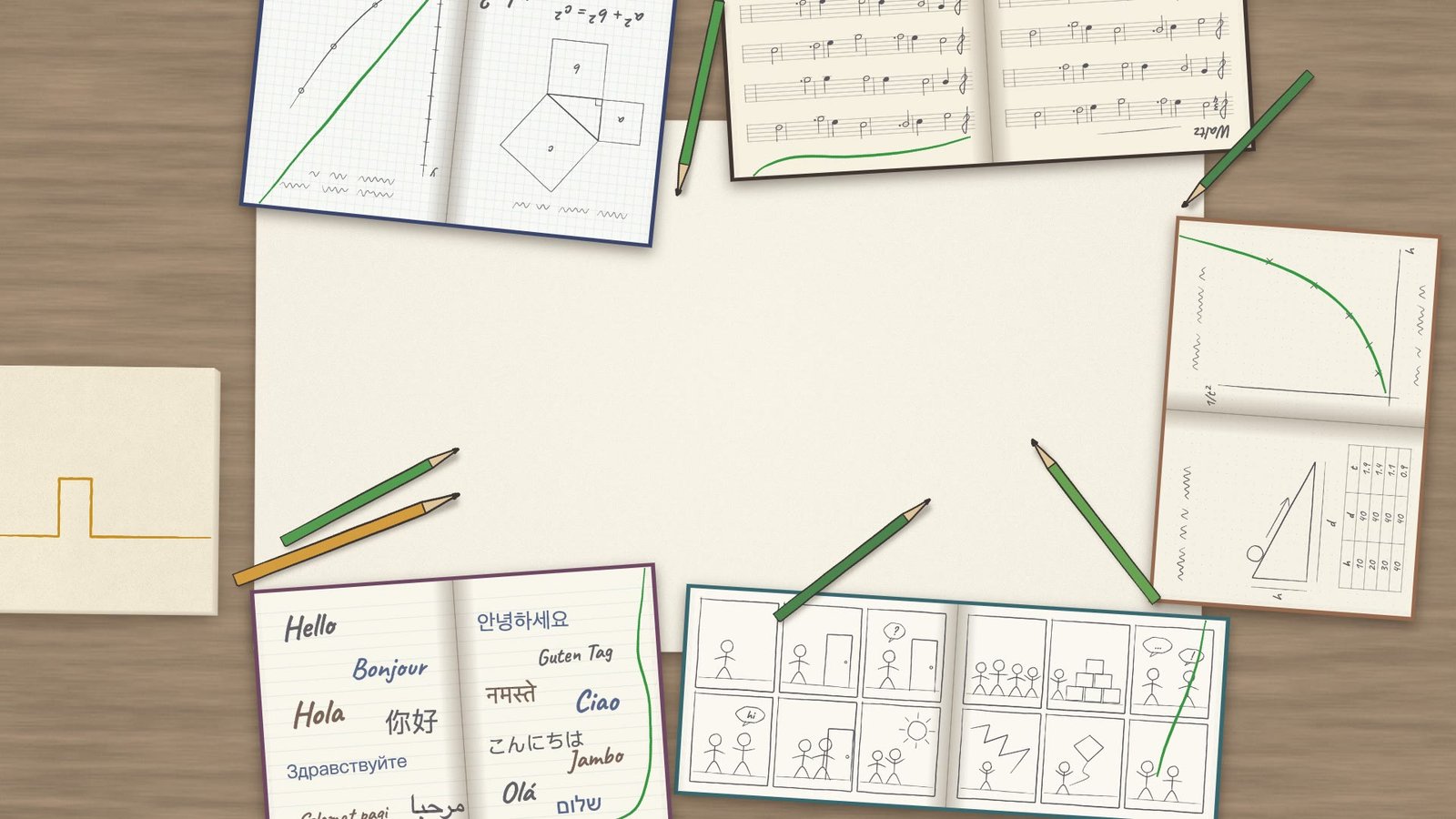
My cover letter, drawn and read aloud. It lasts 5 minutes 46 seconds and carries its own subtitles.
The letter
The words of the film, to read at your own pace.
Dear members of the search committee,
For nearly thirty years, I have kept drawing versions of the same picture. A school. A door. A young person. The schools have changed. So have the doors. And on each page, I am walking beside a student, gently guiding them towards the door, helping them find the confidence to step through.
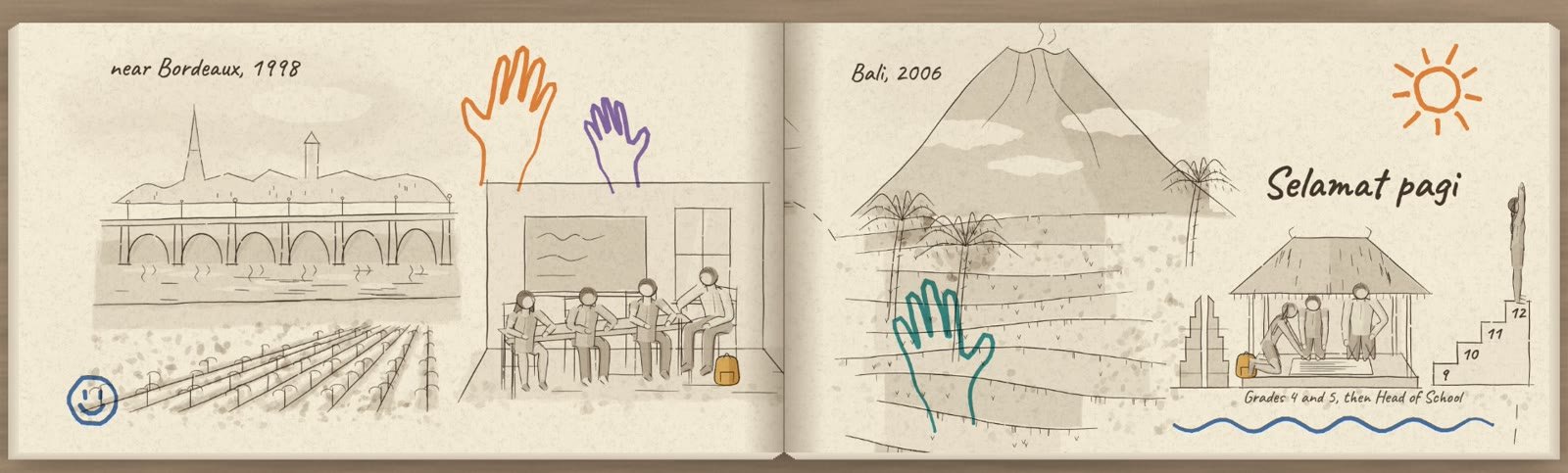
It began near Bordeaux, with adolescents for whom school had been hard. They taught me that before a student can learn, a student must be known.
San Francisco taught me how a school thinks in two languages, and across many cultures.
In Bali, our middle schoolers helped us redefine who we were as a school, and rethink how to live together. Then we opened a high school, one grade at a time, so that families no longer had to leave the island.
In Seoul, we opened the school’s door to the language of the country outside it, so that our students would no longer live there as strangers.
Across these schools, I have kept returning to the same conviction: a school teaches through the way it lives. Through the care we take to know each student. The languages and cultures we bring together. The decisions we share. The connections we build with the country around us. John Dewey put it this way:
“We never educate directly, but indirectly by means of the environment.”John Dewey, Democracy and Education, 1916
For me, leadership means helping shape that environment: what a young person finds on the other side of the door.
For twelve years, that environment has been the United Nations International School. The first three taught me that every tool teaches. A tool is never only a tool: it shapes how students learn, how they speak to one another, and what they come to expect of themselves.
In the nine years since, I have carried the lessons of that whole journey into the daily life of our Junior School. With teachers and families, we have shaped a community where students are known, teachers are trusted, and both have the support and confidence to grow. And each June, I have walked our fourth graders as far as the Middle School door.
This June, I would like to walk with them.
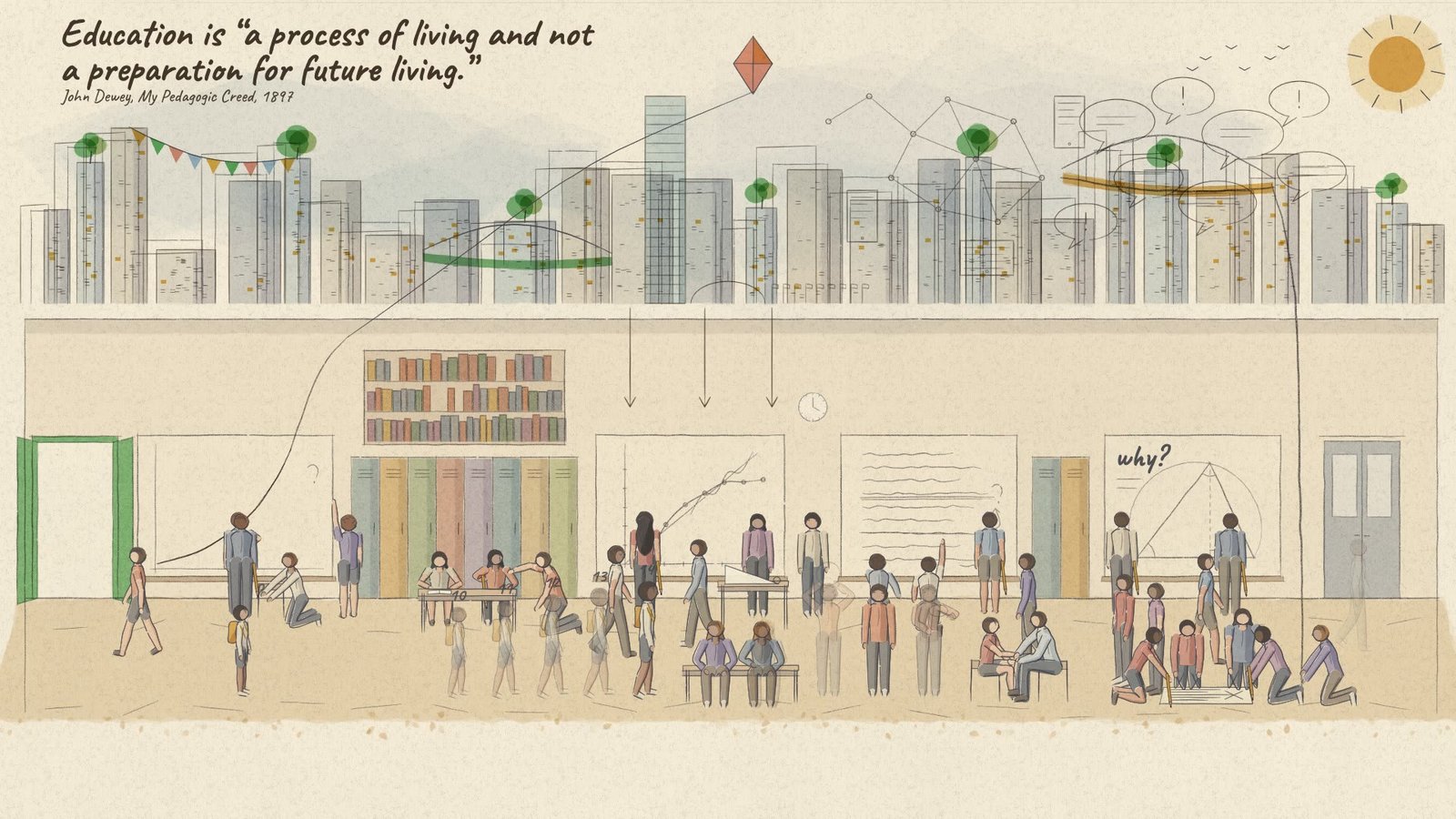
They have been wondering since the day they first came through our door. Between ten and fourteen, the questions become more personal. Friendships are drawn, rubbed out, and drawn again. They try on one self, then another. And they watch us closely, to see whether we mean what we say. So much is still in pencil. And increasingly, they want to hold the pencil themselves.
Their learning must deepen with them. A mathematical problem that asks them to explain why. A text that unsettles what they thought they knew. An experiment whose results challenge their first explanation. Knowledge gives their questions substance; careful teaching gives them the tools to pursue them. They need work that stretches them, and the support to stay with it. They need to experience the generosity of thinking together: how someone else’s question can take their own understanding further. There is a quiet confidence that comes from understanding something that once seemed beyond you.
And while they are drawing themselves, the world is being redrawn around them. By decisions made elsewhere. By technologies they are still learning to understand. By voices telling them what matters, and who they ought to be. They are trying to belong to a picture that will not hold still. The pace keeps quickening; growing into themselves still takes time. They want school to give them that time, people they can trust, and real opportunities to shape the life they share. To discover that they can belong while they are still becoming. And that they, too, have a hand in drawing the world.
Beyond that Middle School door is a community with its own story, its own strengths, and a life that matters now. The middle years deserve more than a hurried passage between childhood and high school. Education, Dewey wrote, is a process of living and not a preparation for future living.
Every discovery, every friendship, every difficulty faced together belongs to a life already being lived. These years call for a school fully attentive to who its students are, even as they discover who they might become.
That is why I am applying to be Middle School Principal: to contribute to that journey. These pages hold what I have learned, and I did not draw them alone. Students, teachers, staff and families had a hand in every one. What I would bring is that experience, and the same commitment to students. The Middle School has its own pages, drawn by its own hands.
The next page is open. I would like us to draw it together.
Pascal ValletJunior School Principal, United Nations International School
The résumé
Two pages. Green marks the work with adolescents and the middle years.
The documents
To keep, print or pass on.
Résumé
One career, every stage of school: the levels I have led or taught, and what I did there.
DownloadPDF · 2 pages · 364 KBCover letter
The same text as the film and as the letter above, set on two pages.
DownloadPDF · 2 pages · 148 KBReferences
Three letters of recommendation written for this application, and a letter of support from Professor Ollivier Dyens of McGill University.
DownloadPDF · 10 pages · 882 KB · opens with the password given with my applicationThe next page is open.